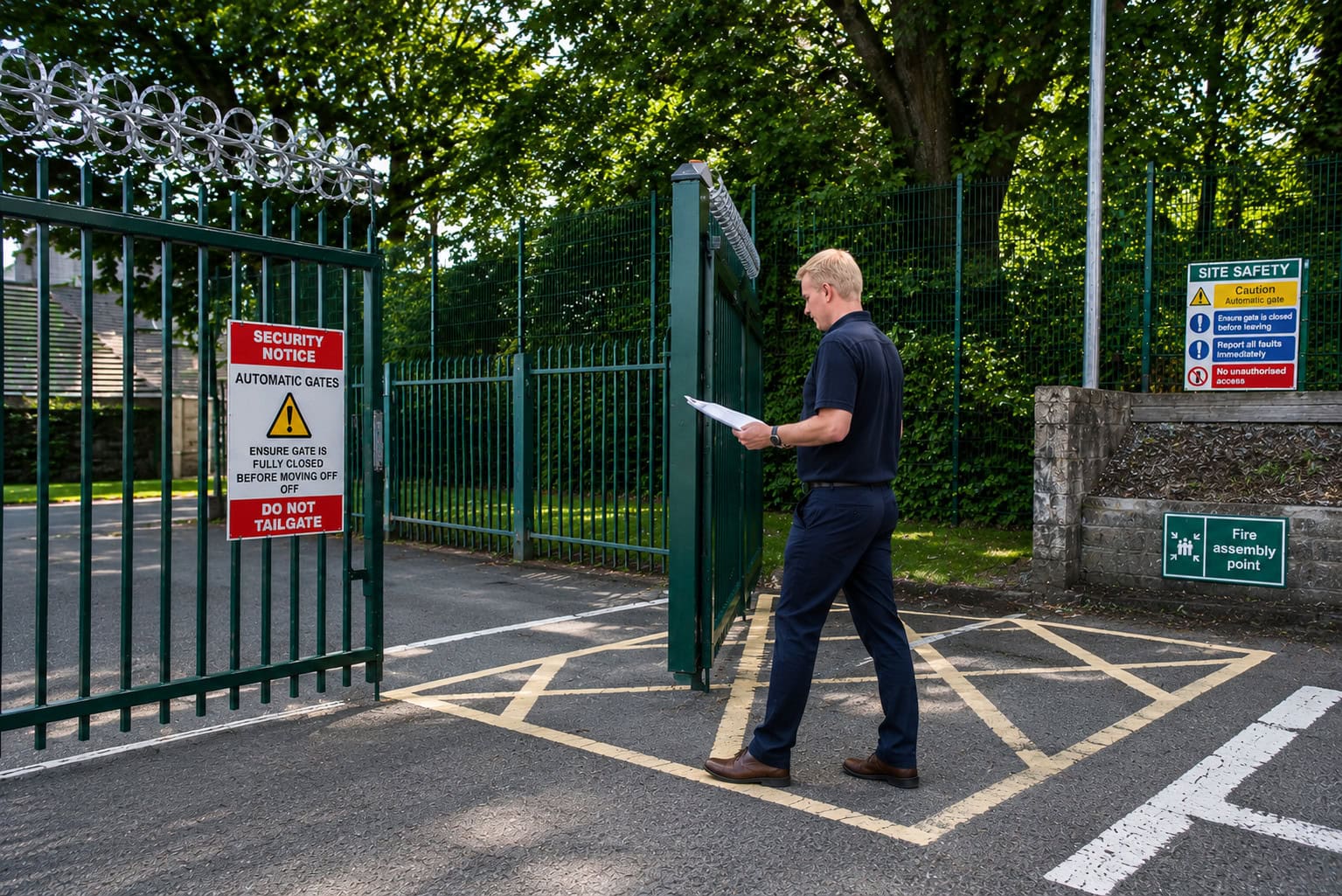
Automated gates are widely used on commercial and industrial sites to control access, manage traffic flow and improve security. However, once a powered gate is installed, it becomes part of a site’s health and safety responsibilities.
For commercial duty holders, understanding those responsibilities is essential. Gate safety is not just a design or installation issue. It is an ongoing operational obligation that must be actively managed.
Who Is the Duty Holder on a Commercial Site?
On commercial premises, responsibility for an automated gate system may sit with one or more parties, including business owners, facilities or estates managers, managing agents, landlords or freeholders, and public sector bodies.
Where responsibility is shared, it is important that roles are clearly defined. In the event of an incident, enforcement bodies will expect to see clear evidence of who is responsible for the safe operation and maintenance of the gate system.
Why Commercial Gate Systems Carry Higher Risk
Commercial and industrial gate systems typically operate under more demanding conditions than residential installations. Higher usage levels, multiple authorised users, pedestrian and vehicle interaction, and integration with wider access control systems all increase risk if systems are not actively managed.
In these environments, wear and tear can develop quickly, and safety devices may become misaligned, damaged or bypassed without routine inspection.
Key Safety and Compliance Considerations
Commercial duty holders should ensure automated gate systems are suitable for the site environment and usage levels, have appropriate safety devices installed and functioning correctly, are commissioned and tested properly, are subject to planned inspection and maintenance, and have clear records of servicing, testing and repairs.
Compliance relies on ongoing management and documented evidence that safety risks are being controlled.
The Importance of Planned Maintenance
Planned maintenance plays a critical role in commercial gate safety. Regular servicing helps identify developing faults early, ensures safety devices continue to operate as intended, reduces the risk of unplanned downtime, and demonstrates that duty holder responsibilities are being met.
Without a structured maintenance regime, even a well-designed system can become unsafe over time.
Further Guidance and Next Steps
Our Safety and Compliance Guide provides a detailed overview of the legal and practical framework surrounding automated gate safety. Commercial operators may also benefit from sector-specific advice tailored to their site type and usage patterns.
Speak to Our Team
If you operate automated gates on a commercial site and would like practical guidance on compliance, maintenance or system suitability, our team can provide clear, professional advice.
Request a Quotation